Countries Convened for Joint Cross-Border Collaboration, Strategic Risk Assessment, and Contingency Plan Development
————————
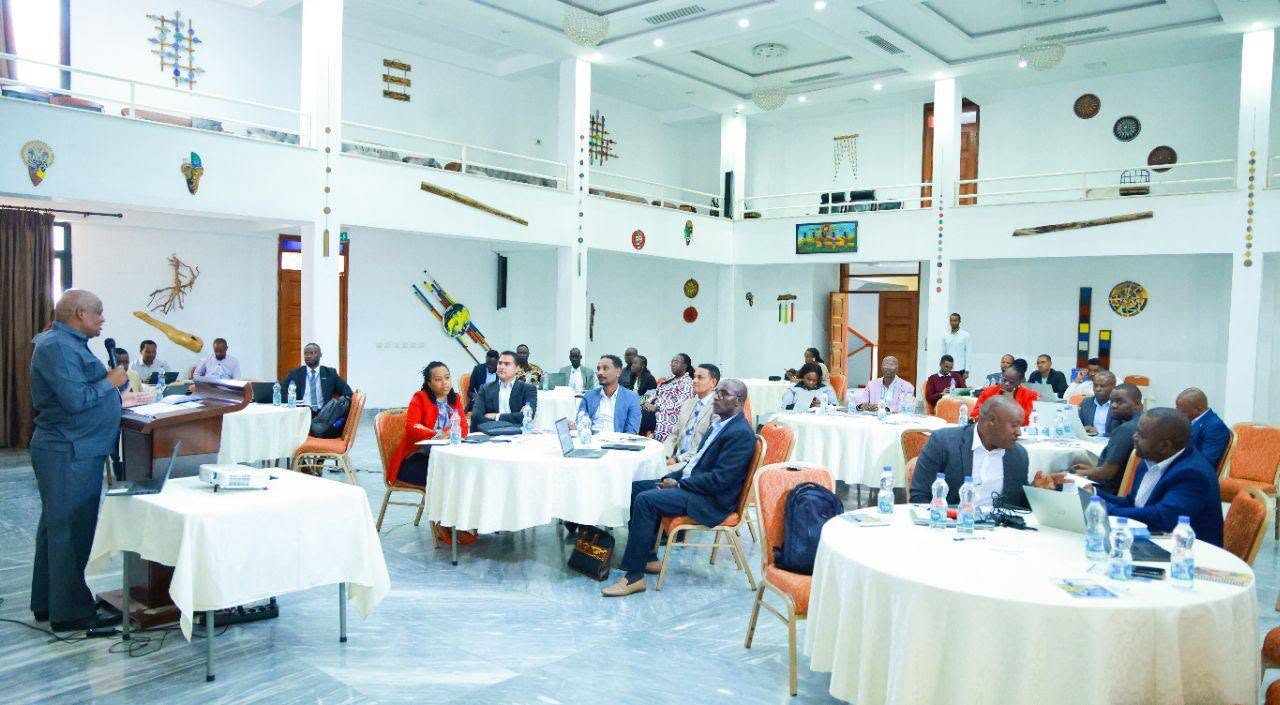
The Ethiopian Public Health Institute (EPHI), Travelers and Border Health Directorate in collaboration with the International Organization for Migration (IOM), the United Kingdom Health Security Agency (UKHSA), and the East, Central and Southern Africa Health Community (ECSA-HC), has formally convened a high-level Joint Cross-Border Collaboration, Coordination, Strategic Risk Assessment and Multi-Hazard Public Health Emergency Contingency Plan (MPHECP) development technical workshop to strengthen regional health Security.
This workshop brings together Senior Officials and technical delegations from Ethiopia, Kenya, and South Sudan to establish a coordination, collaboration and information sharing to prevent and control cross border Public Health threats among the three countries.
The event, which runs from April 20 to May 2, 2026, focuses on the Joint Strategic Risk Assessment (JSRA) and development of Multi-Hazard Public Health Emergency Contingency Plan (MPHECP). The initiative highlights a growing commitment to regional collaboration in the events of cross border public health threats facing across the borders.
The inaugural session featured executive addresses from representative leaders of the EPHI, IOM, UKHSA, and ECSA-HC, alongside with senior health officials from the three participating nations. These remarks underscored the necessity of collective accountability and the sharing of real-time epidemiological data.
Dr. Mesay Hailu, Director General of EPHI, delivered a comprehensive opening speech emphasizing the critical juncture at which Ethiopia’s public health infrastructure currently stands. He underscored that the primary goal of the gathering was to move beyond theoretical planning and into “evidence-based health security action.” He specifically highlighted that the commitment to the 7-1-7 framework—detecting an outbreak within seven days, notifying within one day, and responding within seven days—is not just a technical target but a promise to safeguard the lives of every Ethiopian.
Dr Mesay underscored that ensuring cross-border Health Security is one of the top EPHI’s priorities and promised the institution’s commitment to implement the output of this workshop along with the participating countries and collaborating partners as well as multisectoral collaboration through One Health approach.
The Director General, acknowledged United States of America (USA), United Kingdom (UK) and World Bank Group as well as the IOM, UKHSA and ECSA-HC for the financial and technical support they committed for this impactful activity.
Deputy Director General of EPHI Dr. Melkamu Abite, addressed the technical and operational requirements for a resilient health system. Drawing from his extensive experience in public health emergency management, Dr. Melkamu focused on the necessity of “ground-level readiness,” pointing out that while national policies are robust, the success of Ethiopia’s health security depends on the strength of its laboratory systems and surveillance networks. He emphasized the importance of strict monitoring and evaluation of the implementation of the deliverables of this workshop and mentioned the commitment.
This trilateral initiative represents a significant milestone in the broader African health security agenda. By focusing on cross-border collaboration and point-of-entry resilience, Ethiopia, Kenya, and South Sudan are establishing a scalable blueprint for regional stability.
The resulting contingency plans will serve as the definitive operational manual for health emergencies, ensuring that resource mobilization and risk communication remain seamless across the Horn of Africa.
See less
Sidama Public Health Institute Communication Affairs
dpeSrtosnol7ima02crA9l7905ui09 gfh78ml38agi31458175g5u157hpt ·